Hook and Ring Game Instructions: A Comprehensive Guide
Hook and Ring is a captivating game demanding skill, strategy, and luck; mastering the core mechanic involves skillfully tossing rings to hook onto a designated hook.
Numerous plans are available online, allowing for scaling and customization based on desired size, with simple geometry aiding in construction for optimal hook height.
Gameplay is straightforward: successfully hooking the ring wins, while advanced versions introduce numbered hooks for a sequential challenge, adding layers of complexity.
Hook and Ring is a timeless game of dexterity and precision, enjoyed for generations as a test of skill and a source of friendly competition. The objective is deceptively simple: successfully maneuver a ring to encircle and secure it upon a strategically positioned hook.
Despite its apparent simplicity, mastering Hook and Ring requires a nuanced understanding of throwing techniques, accurate aiming, and an appreciation for the subtle physics governing ring trajectory. The game’s appeal lies in its accessibility – easily constructed with basic materials – yet offers a surprisingly challenging experience for players of all ages.
Variations abound, from tabletop versions perfect for casual play to more elaborate, ceiling-mounted setups that elevate the game to a visually striking centerpiece. Whether played with established rules or customized house rules, Hook and Ring consistently delivers engaging entertainment, fostering social interaction and a healthy dose of playful rivalry.
This guide will delve into the intricacies of Hook and Ring, providing comprehensive instructions, strategic insights, and creative ideas to enhance your gameplay experience.
Historical Background of the Game
Pinpointing the exact origins of Hook and Ring proves elusive, shrouded in the mists of time and folk history. Similar ring-and-peg games have surfaced across various cultures throughout history, suggesting a widespread and enduring human fascination with this fundamental challenge of skill.
Evidence points to antecedents in traditional pub games and nautical pastimes, where sailors likely devised similar amusements during long voyages. These early iterations often served as both entertainment and a means of honing hand-eye coordination, crucial for life at sea.
The game’s popularity surged during the 19th and 20th centuries, becoming a staple in taverns and amusement parks. Its simple construction and engaging gameplay contributed to its widespread adoption, transcending social boundaries and captivating audiences across diverse communities.
While the precise evolutionary path remains unclear, Hook and Ring’s enduring appeal speaks to its timeless quality, a testament to its ability to provide simple, yet satisfying, entertainment for generations.
Materials Needed for Construction
Constructing a Hook and Ring game requires readily available materials, adaptable to both tabletop and ceiling-mounted versions. Wood is fundamental – plywood, pine, or even reclaimed lumber work well for the base and hook support structure.
You’ll need a sturdy hook, traditionally metal, though robust plastic alternatives exist. Rings are essential; metal rings offer durability, while plastic provides a lighter, more accessible option. Consider the ring diameter relative to the hook size.
Fasteners like screws, nails, or wood glue are crucial for assembly. For ceiling mounting, you’ll require strong rope or chain, along with secure ceiling hooks capable of supporting the game’s weight.
Finishing materials like sandpaper, paint, or varnish enhance aesthetics and protect the wood. Basic tools – a saw, drill, measuring tape, and screwdriver – complete the material list, enabling a satisfying DIY project.
DIY Construction Plans: Scaling and Geometry
Scaling your Hook and Ring game involves determining the desired size and adjusting plans accordingly. There isn’t a standard size, allowing for creative freedom. Begin by choosing a comfortable playing height, influencing the overall dimensions.
Geometry plays a key role in calculating the optimal hook placement. The height of the hook dictates the angle and distance for successful ring throws. Utilize basic trigonometric functions – sine, cosine, and tangent – to determine these measurements.
Consider the ring’s trajectory; a higher hook requires a steeper throw angle. Experiment with different hook heights to find a balance between challenge and playability. Accurate measurements ensure consistent gameplay.

Plans readily available online provide a starting point, but don’t hesitate to modify them. Simple calculations, based on your chosen scale and desired hook height, will yield a customized and enjoyable Hook and Ring experience.
Ceiling Mounted vs. Tabletop Versions
Hook and Ring offers versatility in setup, primarily manifesting as either ceiling-mounted or tabletop versions. Ceiling-mounted games provide a classic, pub-style experience, demanding more physical exertion and a wider throwing space. Installation requires secure mounting to a ceiling joist, ensuring stability and safety.
Tabletop versions, often referred to as ‘mini’ or ‘desktop’ games, are compact and portable. These are ideal for smaller spaces and casual play. They offer a more controlled environment, reducing the need for extensive throwing range.
The choice depends on available space and desired gameplay style. Ceiling-mounted games emphasize power and accuracy, while tabletop versions prioritize precision and finesse.
Searching online for “ring toss” or “hook and ring toss” alongside “mini” or “tabletop” will reveal numerous compact options. Both versions deliver the core Hook and Ring challenge, catering to diverse preferences.

Gameplay Rules and Regulations
Hook and Ring gameplay centers on successfully hooking a ring onto the hook; a single throw constitutes a turn, with the first successful hook winning.
Advanced play involves sequentially hooking numbered hooks, demanding precision and strategic ring allocation during turn-based play.
Basic Gameplay: The Core Mechanic
The fundamental principle of Hook and Ring is remarkably simple: players take turns attempting to skillfully toss a ring, aiming to successfully encircle and secure it onto the centrally positioned hook.
This core mechanic, while appearing straightforward, presents a surprising degree of challenge, requiring a delicate balance of precision, coordination, and a nuanced understanding of ring trajectory.
Players are generally restricted to a “pull back and release” throwing motion, prohibiting any forward momentum generated by the hand itself – ensuring a fair and skill-based contest.
The initial objective is simply to achieve a successful hook; the first player to accomplish this feat is declared the winner in the most basic iteration of the game.

However, this simplicity belies the game’s addictive nature, as mastering the throw and consistently landing the ring requires practice and refinement of technique.
It’s a game that sounds easier than it actually is, offering a compelling blend of accessibility and depth for players of all skill levels.
Scoring System: Traditional Approach
The traditional scoring system in Hook and Ring centers around a sequential challenge, typically involving numbered hooks ranging from one to thirteen. Players are tasked with hooking their rings onto these hooks in ascending numerical order.
Each player is usually allocated a set of six rings per turn. Successful hooks must be achieved in the correct sequence; landing a ring on a hook out of order does not contribute to the score.
If a player manages to successfully hook all six rings onto the corresponding numbered hooks in the correct order, they earn the privilege of continuing their turn, tossing additional rings until a miss occurs.
A missed throw, or a ring landing on an incorrect hook, immediately ends the player’s turn, passing the opportunity to the next participant.
The first player to successfully navigate the entire sequence of numbered hooks, from one to thirteen, is ultimately crowned the victor.
This system promotes strategic ring allocation and consistent accuracy, adding a layer of complexity beyond the basic hooking mechanic.
Advanced Gameplay: Numbered Hooks Challenge
The Numbered Hooks Challenge elevates the classic Hook and Ring experience, introducing a strategic layer demanding precision and sequential thinking. This variant utilizes hooks marked with numbers, typically ranging from one to thirteen, creating a defined order of difficulty.
Players receive a set number of rings – commonly six – per turn, and must attempt to hook them onto the numbered hooks in ascending order. Successfully hooking ring one unlocks the attempt for ring two, and so on.
A crucial element is the continuation rule: if all rings are successfully hooked in sequence, the player earns an extra turn, continuing until a miss or incorrect hook terminates their attempt.
This continuous play mechanic rewards accuracy and builds momentum, creating exciting opportunities for rapid progression through the numbered sequence.
The first player to complete the entire numerical sequence, hooking all rings in the correct order, claims victory in this advanced gameplay mode.
It’s a test of skill, focus, and a little bit of luck, transforming a simple game into a compelling competitive challenge.
Turn-Based Play and Ring Allocation
Turn-based play forms the fundamental structure of a Hook and Ring game, ensuring fair competition and allowing each player dedicated opportunities to demonstrate their skill. Players alternate turns, each receiving a predetermined number of rings for their attempt.
Typically, each player is allocated six rings per turn, though this number can be adjusted based on house rules or desired game length. The player then sequentially throws each ring, aiming to hook it onto the designated hook.
Once all allocated rings have been thrown, play passes to the next player. This cyclical process continues until a player achieves the winning condition, whether it’s the first successful hook or completing the numbered hook challenge.
Ring allocation is crucial for strategic gameplay, as players must carefully consider each throw, maximizing their chances of success with the limited number of attempts.
Maintaining a clear turn order and consistent ring allocation ensures a smooth and enjoyable gaming experience for all participants.
This structured approach fosters both individual skill development and engaging competitive interaction.
Strategies for Success
Mastering throwing techniques, precise aiming, and understanding ring trajectory are vital for success. Defensive blocking can disrupt opponents, enhancing your strategic advantage in this game.

Throwing Techniques: Release and Momentum
Achieving consistent accuracy in Hook and Ring hinges on a refined throwing technique. The most effective method emphasizes a smooth, controlled back-and-forth motion, culminating in a clean release. Avoid incorporating forward momentum from your hand during the throw; the power should originate from the arm’s arc, not a pushing action.
Focus on a pendulum-like swing, maintaining a relaxed grip on the ring. A firm, yet not tense, hold allows for optimal control. Experiment with different release points to discover what yields the most predictable trajectory for your throwing style.
Momentum is key, but it must be harnessed, not forced. Visualize the arc of the ring and aim for a fluid, natural release. Practicing this controlled motion will dramatically improve your consistency and increase your chances of successfully hooking the ring. Remember, a smooth release is paramount.
Aiming Strategies: Precision and Angle

Mastering the art of aiming in Hook and Ring requires a keen understanding of angles and precise adjustments. Don’t focus solely on the hook itself; consider the ring’s trajectory and how it will interact with the target. Slight adjustments to your stance and release point can significantly alter the ring’s path.
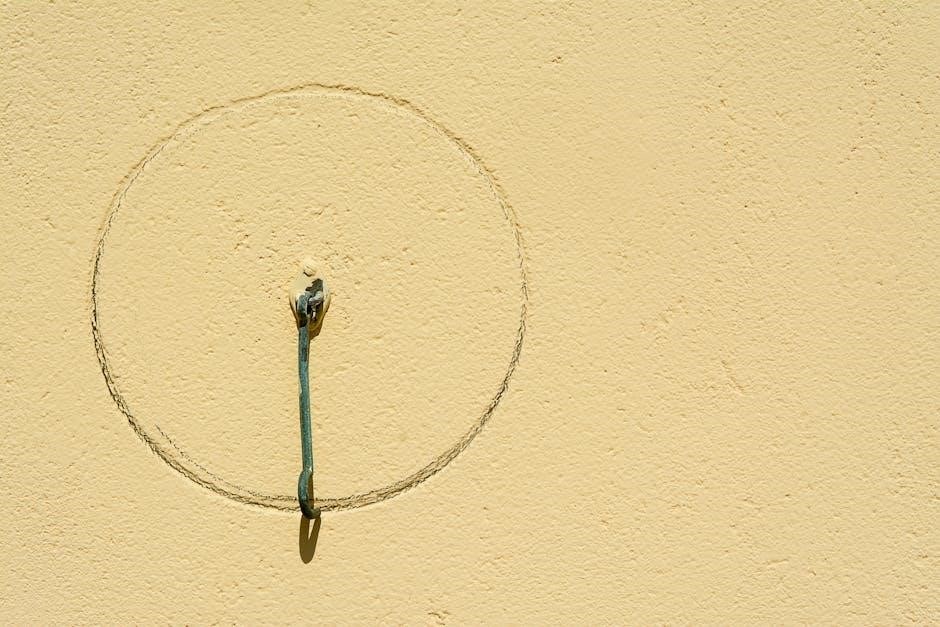
Initially, practice aiming for a point slightly above the hook. The ring’s natural arc will help it settle onto the target. Experiment with different angles – a more direct approach versus a wider arc – to find what works best for your throwing style and the game’s setup.
Visualizing the ring’s path before each throw is crucial. Account for any environmental factors, such as slight breezes, that might affect its trajectory. Consistent practice and mindful adjustments will hone your precision and elevate your game.
Understanding Ring Trajectory
Predicting a ring’s flight path is fundamental to success in Hook and Ring. The trajectory isn’t simply a straight line; it’s a parabolic arc influenced by your release angle, force, and the ring’s momentum. A higher release angle results in a steeper arc, demanding more precision, while a lower angle offers a flatter, faster trajectory.
Consider the ring’s initial velocity. A forceful throw doesn’t always equate to accuracy. Often, a controlled release with moderate speed yields better results. Observe how the ring behaves – does it tend to fall short, overshoot, or drift to one side? These observations inform necessary adjustments.

External factors, like air resistance, play a subtle role. Practice in the game’s typical environment to account for these variables. Analyzing past throws and understanding the interplay of these forces will dramatically improve your consistency and aiming accuracy.
Defensive Play: Blocking Opponents
While Hook and Ring primarily focuses on offensive skill, a subtle defensive element exists, particularly in turn-based play. Blocking isn’t about physically interfering with an opponent’s throw, but strategically occupying hooks to hinder their progress, especially in numbered hook variations.
If playing a sequential hook game, securing a crucial number prevents your opponent from completing their sequence; Anticipate their likely target hook and, if possible, land a ring on it preemptively. This forces them to alter their strategy and potentially waste a turn.
However, prioritize your own scoring opportunities. A defensive block shouldn’t come at the expense of a guaranteed point. Effective defensive play is about calculated disruption, not obsessive obstruction. It’s a delicate balance between hindering your opponent and maximizing your own chances of victory.

Variations and Customization
Explore house rules for unique challenges, modify ring and hook materials for personalized aesthetics, and adapt gameplay to suit preferences for endless fun!
House Rules and Modifications
Unleash creativity with customized house rules to elevate your Hook and Ring experience! Consider implementing a “penalty hook” – missing a throw results in the opponent gaining an extra turn. Alternatively, introduce a “double hook” rule, awarding bonus points for landing two rings consecutively.
For a cooperative twist, establish a team-based challenge where players combine scores. Modify scoring by assigning varying point values to different hooks, increasing the difficulty and strategic depth. Some players prefer limiting the number of throws per round, fostering focused precision.
To enhance the challenge, introduce obstacles around the board, demanding more skillful throws; Experiment with ring size or weight to alter the game’s dynamics. Remember, the beauty of Hook and Ring lies in its adaptability – tailor the rules to create a uniquely enjoyable experience for all participants!
Ring and Hook Material Options
Selecting appropriate materials is crucial for a durable and enjoyable Hook and Ring game. Traditionally, hooks are crafted from metal – steel, iron, or even robust alloys – ensuring strength and longevity. Rings commonly utilize rope, but variations include metal rings or even durable plastic for lighter weight and different gameplay feels.
Wooden rings offer a classic aesthetic, though they may be less resilient than metal. Consider the surface you’ll be playing on; softer materials like cork or rubber can protect floors from damage. For a premium feel, explore brass or polished stainless steel for the hook, adding a touch of elegance.
Experiment with ring weight to influence trajectory and difficulty. Heavier rings require more force, while lighter rings demand greater precision. Ultimately, the best materials depend on your budget, desired aesthetic, and preferred gameplay experience – prioritize durability and safety!